
- Telephone | 01764 654703
- Email | mam@mamcontracting.co.uk
How Proper Drainage Protects Your Property (UK Conditions)
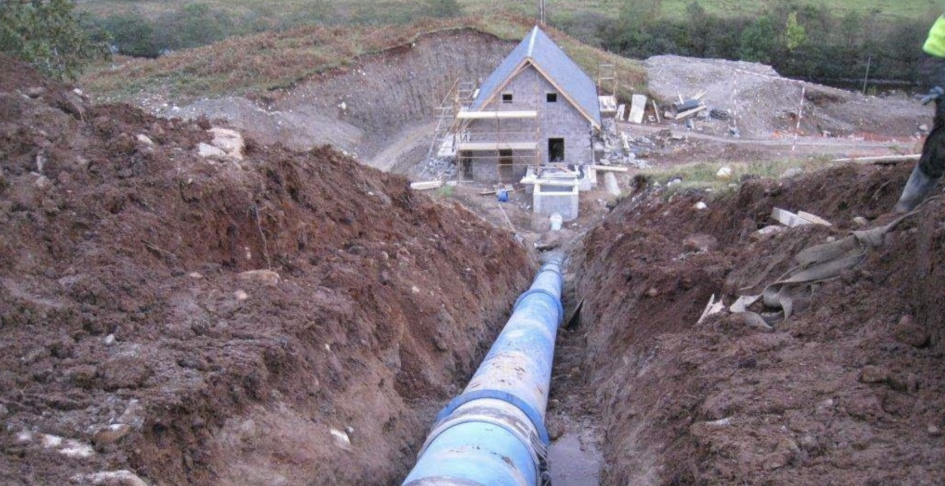
Drainage controls how water behaves on a site, both immediately after rainfall and over the long term. On most UK sites, water does not disappear quickly. It either drains away properly, or it stays within the ground and around the structure. The difference comes down to how the site is prepared.
When drainage is not planned properly, water tends to settle in low areas. In many cases, this ends up being close to the building itself. From there, it starts to affect the ground conditions that support the structure. This is where the real issue lies.
This guide explains why drainage matters in construction, and how proper planning helps protect your property over time.
Why Drainage Matters in Construction
The ground beneath a building is expected to remain stable under load. When that ground becomes saturated, its behaviour changes. It may soften, shift, or expand depending on the soil type. Over time, this creates uneven support beneath the structure. This is why drainage benefits in construction are not just about removing water. They are about maintaining consistent ground conditions, so the structure performs as intended.
In practical terms, proper drainage helps avoid:
- Gradual softening of ground around foundations
- Repeated cycles of expansion and contraction in certain soil types
- Long-term pressure building up against below-ground structures
These are slow-developing problems, which is why they are often underestimated during early stages.
How Water Affects Buildings Over Time
Water rarely causes immediate damage. Its impact builds gradually, often without obvious signs at first.
1. Ground Movement and Load Distribution
Buildings rely on the ground beneath them to distribute weight evenly.When parts of the ground become wetter than others, this balance is disrupted. Some areas may compress more than others, leading to uneven settlement. This is one of the main reasons why small cracks appear over time. It is not always a failure of the structure itself. In many cases, it is a result of changing ground conditions caused by unmanaged water.
2. Repeated Wet and Dry Cycles
In UK conditions, the ground often goes through cycles of wet and dry periods. Without proper drainage, these cycles become more extreme. Soil expands when wet and contracts when dry. Over time, this repeated movement creates stress around foundations. Even if the structure remains sound, it may begin to show signs of strain such as minor cracking or shifting.
3. Surface Impact That Leads to Bigger Issues
Water pooling on the surface is often seen as a minor issue, but it is usually an early sign of poor drainage. That surface water does not stay on top. It eventually seeps into the ground, increasing moisture levels below. This is how small surface issues turn into structural concerns over time.
4. Drainage Planning in UK Construction
Drainage planning is about understanding the site as a whole, not just installing systems. Every site has natural water flow patterns. These are influenced by slope, soil type, and surrounding land. Ignoring these patterns often leads to systems that work on paper but not in practice.
What Effective Planning Takes into Account
Proper construction drainage planning Scotland and across the UK usually considers:
- Natural fall of the land and how water moves across it
- Areas where water is likely to collect during heavy rainfall
- Soil absorption capacity
- How finished ground levels will change water flow
This allows drainage systems to work with the site, rather than against it.
Coordination with Groundwork
Drainage cannot be planned in isolation. It needs to be aligned with excavation levels, foundation layout, and service routes. For example, installing drainage alongside systems like Piping & Cabling during groundwork ensures everything is positioned correctly before surfaces are finalised. If these elements are planned separately, it often leads to conflicts, such as drainage routes clashing with service lines or requiring rework.
House Drainage Solutions in the UK: What Actually Works
There is no single drainage solution that works for every property. Effective systems usually combine multiple approaches based on the site.
1. Surface Water Control
The first priority is moving water away from the building as quickly as possible. This includes managing runoff from roofs, driveways, and hard surfaces. The key here is direction. Water should be guided away immediately, not allowed to spread across the site before being collected.
2. Subsurface Drainage
In some cases, managing water below ground is just as important. This may involve drainage pipes that collect and redirect water before it builds up around foundations. This is particularly useful in areas where ground retains moisture.
3. Soakaways and Ground Absorption
Soakaways are often used to disperse water into the ground. However, their effectiveness depends heavily on soil conditions. In clay-heavy areas, water drains slowly, which limits how well soakaways perform. In these cases, additional drainage measures are often required.
4. Combined Approach
Most effective house drainage solutions UK projects use a combination of systems working together. The goal is not just to remove water, but to manage it at different stages, on the surface, below ground, and as it leaves the site.
Property Flood Prevention in the UK
Flood prevention at property level is about reducing exposure to water, not eliminating it completely. In many cases, the issue is not large-scale flooding, but localised water build-up. Water tends to collect in predictable areas:
- Low points in the site
- Around foundation edges
- Along poorly drained surfaces
Without proper drainage, these areas become saturated over time. Take note, effective drainage systems help by:
- Redirecting water before it reaches critical areas
- Reducing the volume of water absorbed into the ground
- Preventing build-up during periods of heavy rainfall
This is especially important in areas where the ground cannot absorb water quickly.
Realistic Expectations
It is important to understand that drainage has limits.D uring extreme weather, even well-designed systems may be under pressure. However, properties with proper drainage are far better equipped to handle these conditions and are less likely to experience lasting damage.
Why Drainage Should Be Planned Early
Drainage works best when it is part of the groundwork strategy from the beginning. Leaving it until later stages often leads to compromises. By the time construction is underway, ground levels and foundation positions are already fixed. This limits how drainage can be installed. Early planning allows drainage to be integrated with:
- Excavation and site levels
- Foundation design
- Service routes
If you’re planning a project, we always recommend considering drainage from the very beginning. It’s one of those elements that’s much harder to correct later on. At MAM Contracting, we approach drainage as part of the overall groundwork, so everything works together from the start.