
- Telephone | 01764 654703
- Email | mam@mamcontracting.co.uk
Groundwork & Drainage for Sloping Sites: Best Practices
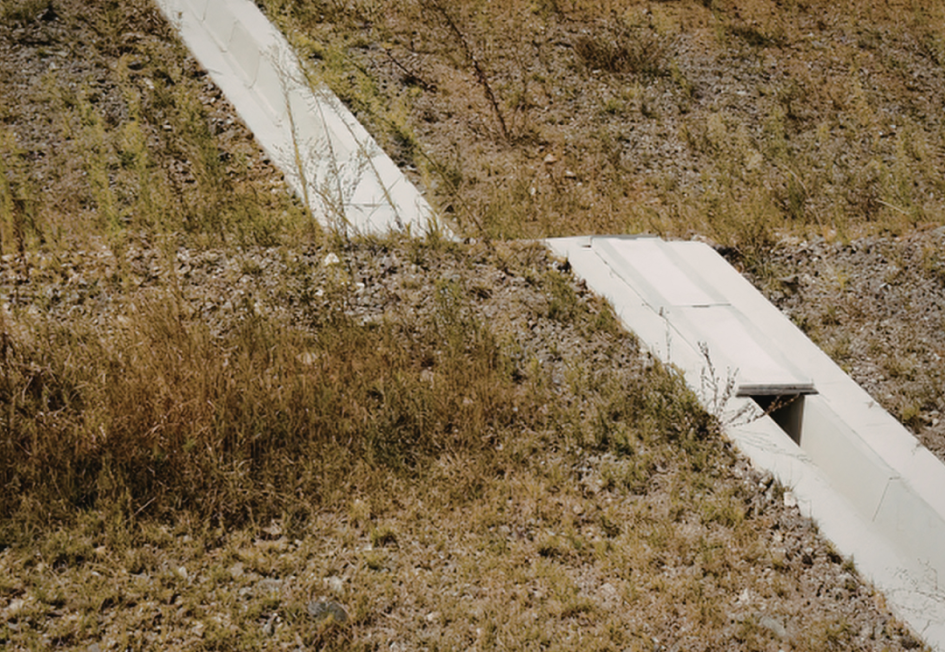
Building on sloping land presents challenges that require careful planning long before construction begins. While uneven terrain can offer opportunities for development in locations where flat land is limited, it also introduces considerations that can significantly affect the success of a project.
Ground stability, access, earthworks, foundation design, and drainage all become more complex when working on gradients. Across Scotland, many construction projects take place on sloping sites.
From rural infrastructure and forestry projects to commercial developments and housing schemes, contractors are often required to work with the natural landscape rather than reshape it entirely. In these situations, effective drainage and groundwork planning play a critical role in protecting both the development and the surrounding environment.
This guide explores the key considerations involved in developing sloping sites, including drainage design, earthworks, retaining structures, and practical methods for managing water effectively.
Why Sloping Sites Require a Different Approach
Construction on level ground is often more straightforward because water tends to move slowly and predictably. On a slope, gravity increases the speed at which water travels across the land. During periods of heavy rainfall, this can lead to:
- Erosion of exposed soil
- Soil displacement on unstable sections
- Increased pressure on drainage systems
Construction activities can further influence how water behaves. Excavation works, access roads, retaining walls, and new buildings all alter natural drainage routes. Water that once followed a particular path may be redirected towards foundations, embankments, or neighbouring land if drainage is not carefully planned.
Ground conditions can also vary considerably across a sloping site. Higher areas may remain relatively dry while lower sections become saturated after rainfall. These variations can affect excavation methods, foundation requirements, and drainage design.
Many of the issues explored in our article on common groundwork problems and how to avoid them become more significant when working on uneven terrain, making detailed site assessment an essential part of the planning process.
Understanding Existing Site Conditions
Before any drainage infrastructure or earthworks are designed, it is important to understand how the site currently performs. Sloping sites can behave differently from one area to another, especially where gradients, soil types, vegetation, and existing water routes change across the land. A proper assessment helps contractors understand where water comes from, where it travels, and where it is likely to collect during periods of heavy rainfall. This information allows the drainage design to respond to the actual site conditions rather than relying on assumptions.
Reviewing Gradients and Water Movement
The gradient of the site has a direct effect on water speed and direction. Steeper sections can increase runoff, while flatter areas lower down the slope may become collection points for water and sediment. During this stage, contractors should identify:
- Natural drainage routes
- Low points where water may collect
- Existing embankments or unstable areas
- Sections where runoff could affect foundations, access roads, or neighbouring land
This helps determine where drainage channels, swales, attenuation features, or discharge points may be required.
Checking Soil and Ground Conditions
Soil type has a major influence on drainage performance. Free-draining soils may allow water to infiltrate naturally, while clay-rich or compacted ground can hold moisture for longer periods. Ground conditions can also vary across the same site. Higher areas may remain firm and dry, while lower sections may become soft after rainfall. These differences can influence excavation methods, foundation design, access planning, and the choice of drainage system.
Identifying Groundwater and Stability Risks
Surface water is not the only concern on sloping sites. Groundwater can move through the soil and emerge lower down the slope, especially after prolonged wet weather. A detailed assessment helps identify seepage points, groundwater levels, and areas where additional stabilisation measures may be required. Addressing these issues during the planning stage can help prevent future drainage problems and support the long-term performance of the development.
The Importance of Effective Sloping Site Drainage Solutions
Drainage is one of the most important elements of any development on uneven terrain. Without effective water management, even well-designed construction works can be vulnerable to erosion, instability, and long-term maintenance problems. Effective sloping site drainage solutions focus on controlling how water moves across and through the site. This typically involves:
- Collecting surface water before it can accumulate in vulnerable areas
- Intercepting groundwater where ground conditions require additional control
- Directing runoff towards suitable discharge points
- Reducing erosion caused by fast-moving water
- Protecting foundations, access routes, and surrounding infrastructure
Drainage should never be viewed as a standalone element. Roads, foundations, landscaping, retaining walls, and utility routes all influence drainage performance. For this reason, drainage planning should form part of the wider site strategy from the earliest stages of development. As discussed in our guide on choosing the right drainage contractors for your site, successful drainage design depends on understanding the specific conditions of the land rather than applying a standard solution.
Managing Water Runoff on Slopes
Managing water runoff on slopes is often one of the greatest challenges facing contractors and developers. When rainfall travels downhill, it gathers momentum. As water accelerates, it can remove topsoil, create erosion channels, and undermine exposed ground. In severe cases, uncontrolled runoff may damage infrastructure or contribute to flooding in surrounding areas.
The goal of drainage design is to control the movement of water and reduce the risk of damage. On sloping sites, this usually means slowing water down, spreading flow where appropriate, and collecting runoff before it reaches vulnerable areas.
Practical ways to control runoff
A well-planned drainage strategy may include several measures working together across the site, such as:
- Swales to slow and direct surface water through shallow, controlled channels
- Filter drains to collect runoff while allowing water to pass through suitable drainage layers
- Drainage channels to manage water around access roads, hardstanding areas, and building platforms
- Attenuation systems to temporarily store water during heavy rainfall
- Collection networks to direct runoff towards approved discharge points
These systems help prevent water from travelling unchecked down the slope. By intercepting runoff at different points, contractors can reduce erosion risks, protect exposed ground, and improve the long-term stability of the site.
Groundworks Slope Construction and Earthworks Planning
Groundworks slope construction typically involves a greater degree of earthworks than development on flat land. Many sloping sites require cut-and-fill operations to create suitable construction platforms. Material excavated from higher areas can often be used to raise lower sections of the site, helping to minimise waste and reduce transportation costs.
However, changing site levels inevitably alters the way water moves across the landscape. New embankments, excavated areas, and regraded slopes can all influence drainage patterns. This is why drainage design should be developed alongside earthworks planning rather than being introduced later in the project. A coordinated approach helps ensure that changes to the landscape do not create unintended drainage issues.
Contact us today at MAM Contracting if you are planning a project on sloping or challenging ground. Our team can assess the site conditions, advise on suitable drainage and groundwork requirements, and help deliver a practical solution from the earliest stages of construction.