
- Telephone | 01764 654703
- Email | mam@mamcontracting.co.uk
How Groundworks Tie into Utilities & Site Services
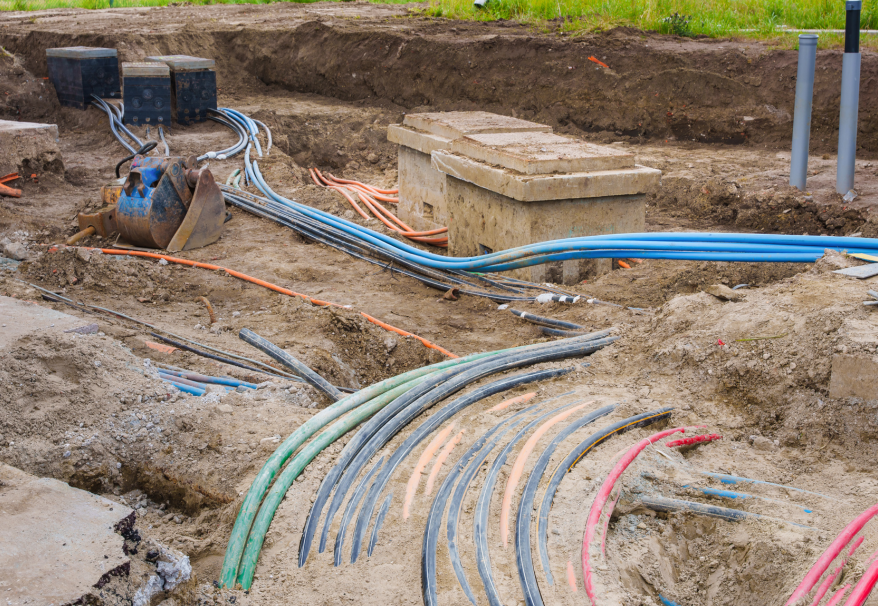
Groundworks do far more than prepare a site for foundations. They also create the routes, trenches, levels, and access needed for the utilities that allow a finished development to function properly. Water, drainage, electricity, telecommunications, ducting, and other site services all need to be coordinated with the groundwork programme. Poor planning at this stage can lead to service clashes, repeated excavation, unsuitable drainage falls, or completed areas being reopened later in the project.
A well-planned groundworks utilities connection strategy considers these services before major excavation begins. This allows underground routes to be coordinated with foundations, roads, drainage, landscaping, and other parts of the development. MAM Contracting combines groundworks services with piping and cabling, allowing underground infrastructure to be considered as part of the wider site preparation process.
Why Utilities Need to Be Planned During Groundworks
Most utilities are installed below ground, which means their routes need to be established while the site is still open and accessible. Once foundations have been constructed, roads have been formed, or hard landscaping has been completed, changing underground service routes becomes considerably more disruptive. Early planning gives project teams an opportunity to coordinate:
- Drainage and sewer routes
- Water supply pipework
- Electricity and communications ducts
- Service entry points
- Inspection chambers and access points
The aim is to create practical routes that serve the finished development without interfering with other infrastructure. This is particularly important on larger sites, where several services may need to cross the same areas or enter buildings from different directions.
Avoiding Underground Service Clashes
One of the main reasons to coordinate utilities during groundworks is to reduce conflicts between underground infrastructure. A proposed drainage pipe may cross an electrical duct. A foundation could interfere with an existing service route. A manhole may be positioned where a road, entrance, or future structure is planned. These issues are much easier to resolve during design and early excavation than after permanent construction has progressed. Service drawings, site surveys, levels, and utility information should therefore be reviewed together rather than in isolation.
Utility Trench Excavation Scotland Projects Need To Consider
Utility trench excavation Scotland projects can involve much more than digging a channel and installing a service. Trench depth, width, ground conditions, access, other buried infrastructure, and the type of utility being installed all influence the work required. The trench also needs to support the service correctly and allow for suitable backfilling and reinstatement.
Ground Conditions Influence Trenching
Ground conditions affect the method and speed of excavation. Stable soils may allow straightforward trench construction, while softer ground, rock, groundwater, or made ground can require additional preparation. Wet conditions can also make open trenches difficult to manage. Water entering the excavation may affect both installation and the stability of the surrounding ground. A site investigation can provide useful information about these conditions before excavation starts.
Trenches Need to Follow the Wider Site Plan
Utility routes should be coordinated with roads, foundations, drainage, retaining structures, and future landscaping. Selecting the shortest route is not always the most practical option. Contractors also need to consider access for installation, future maintenance, and the position of other underground infrastructure. Careful route planning can reduce unnecessary excavation and avoid situations where newly completed work needs to be disturbed.
How Site Drainage Connections Fit into Utility Planning
Drainage is one of the most important underground systems on a construction site. Site drainage connections must work with existing levels, proposed buildings, roads, and discharge arrangements. Unlike some other services, drainage often relies on carefully controlled falls to move water through the system. This means drainage routes can have less flexibility than cables or pressurised pipework. Our guide to choosing the right drainage system for your site explains why drainage planning should take place before major groundworks are complete.
Surface Water and Foul Water Need Separate Planning
Surface water and foul water perform different functions and normally follow separate drainage routes. Surface water systems manage rainfall from roofs, roads, hardstanding areas, and other external surfaces. Foul drainage carries wastewater from buildings towards an appropriate sewer or treatment system. Each network needs suitable pipe routes, chambers, access points, and connections. Confusing these systems or leaving connection details unresolved can create problems once the development becomes operational.
Levels Can Determine the Drainage Route
Drainage design is closely linked to site levels. Pipes generally need sufficient fall to carry water effectively, while inspection chambers and connection points must remain accessible. If finished levels are altered after drainage design is complete, sections of the drainage system may also need to change. This is why drainage, earthworks, and utility planning should be coordinated from the outset.
Sewer And Service Preparation UK Projects
Good sewer and service preparation UK projects require clear information about both existing and proposed infrastructure. Before new services are installed, contractors need to understand what is already beneath the site. Existing drainage pipes, water mains, telecommunications infrastructure, electrical services, and older field drains may all affect the proposed works. Site surveys and available utility records can help identify these routes before excavation begins.
Existing Services Need Protection
Construction work can damage existing utilities if their locations are not properly understood. Heavy plant, deep excavation, piling, or trench construction may all create risks around existing underground services. Known infrastructure should be identified before work begins, with excavation methods adjusted where necessary. Existing drains also require particular attention because development can affect their ability to continue operating.
New Connections Need to Match the Development Programme
Utility connections often involve several organisations and different stages of approval or installation. The groundworks programme should therefore account for when trenches need to be available, when utility contractors will attend, and when areas can be backfilled or reinstated. If these stages are poorly coordinated, trenches may remain open longer than necessary or completed surfaces may need to be excavated again.
Site Services Installation and Construction Sequencing
Site services installation needs to fit into the wider sequence of construction. Underground infrastructure is generally easier to install while access is open, but installing services too early can also expose them to damage from heavy construction traffic or later excavation. The timing needs to balance accessibility with protection.
Coordinate Services Before Roads and Hardstanding
Roads, car parks, paths, and hardstanding areas should ideally be coordinated with underground services before final construction. Installing ducts or drainage beneath completed roads can require cutting into finished surfaces, creating additional labour and reinstatement work. Where future services are anticipated, ducts or crossings may sometimes be incorporated during initial construction so that later installation causes less disruption.
Consider Building Entry Points Early
Utilities eventually need to enter the buildings they serve. Water, power, communications, and drainage connections all require suitable entry or exit points that match both the building design and underground routes. Incorrect positioning can create awkward connections or require modifications to foundations and surrounding groundworks. These details should therefore be coordinated before concrete and permanent structures limit the available options.
Piping And Cabling Within Groundworks
Utility infrastructure extends beyond drainage and water connections. Power cabling, fibre optic cables, CCTV systems, communications infrastructure, ducting, and process pipework may all require underground routes across a site. MAM Contracting's piping and cabling services include utility pipework, ducting, drainage systems, electrical duct laying, data cables, fibre optic cabling, and other service installations. Where these works form part of the same development, coordination with groundworks can reduce unnecessary excavation and improve the overall organisation of underground infrastructure.
Ducting Provides A Defined Service Route
Ducts can protect cables and provide a dedicated underground route between service points. Their position needs to account for other infrastructure, finished levels, and future access requirements. Installing ducting during the groundwork stage can also reduce the need for later excavation once other parts of the site have been completed.
Access For Future Maintenance Matters
Utilities should not only work on the day they are installed. Inspection chambers, access points, valves, and other service features need to remain reachable throughout the life of the development. Poor positioning can make future maintenance more disruptive and may require finished areas to be disturbed. Long-term access should therefore form part of the original service layout.
Common Utility Planning Problems on Construction Sites
Several problems tend to arise when groundworks and utility planning are treated as separate stages. These can include:
- Services crossing at unsuitable levels
- Drainage routes conflicting with foundations
- Missing ducts beneath completed roads
- Utility entry points being incorrectly positioned
- Trenches being reopened after reinstatement
- Maintenance access being obstructed
Most of these problems are not caused by the utility itself. They result from the sequence or layout not being coordinated early enough. A clear service plan allows contractors to understand where each system needs to go before excavation begins.
Groundworks And Utilities on Challenging Sites
Utility installation becomes more complex where the site includes steep ground, restricted access, existing infrastructure, or difficult soil conditions. Sloping sites may affect trench depths and drainage falls. Rural sites may require longer service routes. Confined developments may leave limited space for multiple utilities. Groundworks provide the opportunity to address these constraints before permanent construction reduces the available options. MAM Contracting's Kelburn groundworks project provides an example of several site elements being delivered together, including access improvements, foundation and drainage work, and the installation of water and services.
Why One Coordinated Site Strategy Matters
Groundworks, utilities, drainage, and access all influence each other. A change to the road layout may affect service crossings. A revised building position can alter drainage routes. New site levels can influence sewer connections and inspection chambers. Treating these elements as part of one coordinated plan gives project teams a clearer understanding of what needs to happen and when. It can also reduce repeated excavation, limit clashes between contractors, and protect work that has already been completed.
Connecting Groundworks with The Wider Development
A reliable groundworks utilities connection plan brings site preparation and underground services together. Drainage, sewer connections, water, electrical ducts, communications, and other infrastructure all depend on suitable excavation, levels, access, and coordination. Early planning can prevent service clashes, reduce repeated groundwork, and make later construction stages easier to manage.
MAM Contracting delivers groundworks alongside drainage, piping, cabling, and wider site services installation across projects in Scotland. Where a development requires several underground services to be coordinated, contact MAM Contracting to discuss the proposed site works and service requirements.